


Description
Product Overview
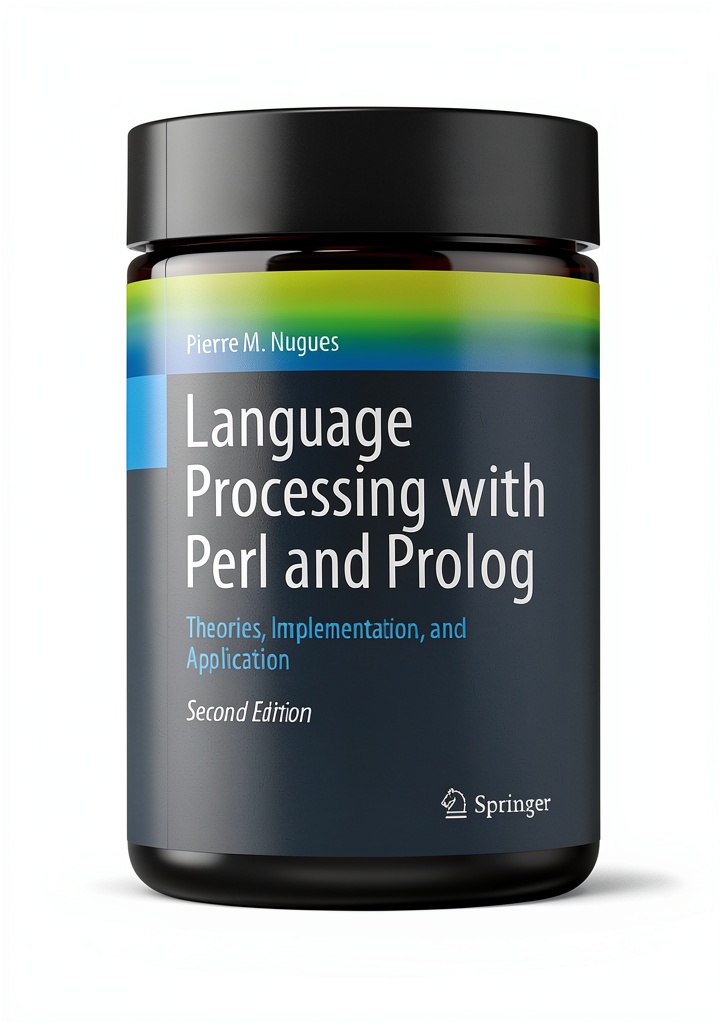
The 2nd edition of Prolog Programming published by Springer is a comprehensive digital textbook designed for anyone interested in mastering the declarative programming language Prolog. This eBook spans 1142 pages and combines theoretical foundations with practical coding examples, making it suitable for students, researchers, and professional developers alike. The content is organized into clear chapters that progress from basic syntax and unification to advanced topics such as meta‑interpretation, constraint logic programming, and natural language processing. Each chapter includes end‑of‑section exercises, detailed solutions, and references to further reading, allowing readers to reinforce their understanding through hands‑on practice. Enhanced typesetting ensures that code snippets are displayed with proper indentation and syntax highlighting, which improves readability on Kindle devices and other e‑readers. The book also features a searchable index, allowing users to locate specific predicates, modules, or concepts quickly. As part of the Cognitive Technologies series, the text emphasizes the role of logic programming in artificial intelligence and knowledge representation, providing context for modern applications. The digital format includes page‑flip navigation, enabling readers to skim through sections or revisit earlier material with a single tap. With a file size of 10.1 MB, the eBook loads quickly and occupies minimal storage, while still delivering a rich, high‑resolution reading experience. The publication date of August 6 2014 reflects a mature edition that has been refined based on feedback from academic courses and industry workshops. By integrating both classic Prolog examples and contemporary case studies, the book bridges the gap between foundational learning and real‑world problem solving. Prolog has a long history dating back to the early 1970s, and its influence can be seen in modern AI systems, database query languages, and knowledge‑base management tools. This edition captures that evolution, offering historical perspective alongside cutting‑edge techniques. Readers will find discussions on the implementation of Prolog interpreters, the use of tabling for efficient recursion, and the integration of Prolog with other programming environments such as Python and Java. The authors have taken care to include diagrams that illustrate the flow of logical inference, making abstract concepts more tangible. Throughout the book, emphasis is placed on writing clear, maintainable code, with style guidelines that help avoid common pitfalls. The eBook format also supports annotations, allowing learners to add personal notes that can be exported for study groups or revision sessions. Overall, the product delivers depth, breadth, and practical relevance in a single, portable package.
Usage
Prolog Programming is ideal for use in university courses on logic programming, artificial intelligence, and computational linguistics. Instructors can assign chapters as reading material, use the exercises for homework, and employ the solutions as reference for grading. The eBook format allows students to annotate directly on their Kindle, highlight key definitions, and export notes for study groups. Professionals working on expert systems can consult the advanced sections to implement rule‑based inference engines, while data scientists interested in constraint solving can adapt the examples to model optimization problems. The book’s clear explanations make it a valuable resource for self‑directed learners who prefer a structured curriculum without the need for a physical textbook. Because the content is searchable, developers can quickly locate predicate definitions while debugging code in an integrated development environment. The digital nature of the book also supports remote learning environments, where learners can access the material from any location with internet connectivity. Whether you are preparing for certification exams, conducting research, or building production‑grade applications, the eBook provides the depth and breadth required to succeed. It can be used as a primary textbook for semester‑long courses, as a supplemental reference for workshops, or as a quick‑lookup guide for on‑the‑job problem solving. The flexible format means that readers can study in short bursts on a commute or dive deep during dedicated study sessions. The inclusion of real‑world case studies enables practitioners to see how Prolog techniques are applied in domains such as natural language understanding, semantic web services, and automated planning. By integrating the eBook into a blended learning environment, educators can combine traditional lectures with interactive coding labs, enhancing student engagement and retention.
Why Choose Us
Springer’s reputation for academic excellence ensures that the material has been peer‑reviewed and aligns with current educational standards. The authors of Prolog Programming are recognized experts who have contributed to major conferences and journals in logic programming, guaranteeing that the content reflects both theoretical rigor and practical relevance. The 2nd edition incorporates updates based on user feedback, adding new chapters on recent developments such as probabilistic logic programming and integration with modern development tools. Enhanced typesetting and page‑flip navigation improve the reading experience compared to traditional PDFs, reducing eye strain and making code easier to follow. Springer provides responsive customer support for digital products, offering assistance with download issues, device compatibility, and formatting queries. Additionally, the eBook is covered by Springer’s standard return policy, giving buyers confidence in their purchase. By choosing this title, readers gain access to a trusted brand, high‑quality content, and ongoing updates that keep the material current. The publisher also offers optional supplemental resources, such as instructor’s guides and solution manuals, which can be requested through academic channels. The combination of scholarly authority, practical design, and dedicated support makes this eBook a reliable investment for both individuals and institutions.
Key Features
- Comprehensive 1142‑page coverage from fundamentals to advanced Prolog techniques
- Practical exercises with detailed solutions to reinforce learning
- Enhanced typesetting for clear code presentation on all Kindle devices
- Searchable index and page‑flip navigation for efficient reference
- Dedicated Springer’s support and update policy for reliable after‑sales service
FAQ
Is the eBook compatible with all Kindle models?
Yes, the Prolog Programming eBook uses the standard Kindle format and works on all Kindle devices, as well as on the Kindle app for iOS, Android, and desktop computers.
Can I print sections of the book for offline study?
The Kindle terms of service allow personal, non‑commercial printing of limited pages for personal use; however, the eBook is primarily intended for digital reading to preserve formatting and search functionality.
Does the book include any supplementary multimedia resources?
The current edition focuses on text and code examples; there are no video or audio components, but the searchable index and hyperlinks to external resources help readers explore additional material.
What support does Springer offer if I encounter technical issues?
Springer provides a dedicated support team that assists with download problems, device compatibility, and formatting questions, ensuring a smooth reading experience.





 Zondervan Science and Religion Kindle Book
  French Society & Social Sciences Kindle eBook by Stock 468‑Page Study
Reviews
There are no reviews yet.